


Cataracts in Pets: Causes, Symptoms, and Natural Support with Ethos Bright Eyes NAC Eye Drops
Cataracts don't just affect humans — they're one of the most common eye conditions seen in companion animals and wildlife alike. Dogs, cats, horses, rabbits, cattle, and even wild species such as kangaroos and wallabies can all develop cataracts, and left unmanaged, the condition can progress to complete blindness.
The good news is that pet owners have more options today than ever before, including non-surgical approaches like Ethos Bright Eyes NAC Cataract Eye Drops, which are formulated to support the eye naturally alongside good nutrition and daily care.
What Is a Cataract?
A cataract is a clouding of the lens inside the eye, which normally should be clear. As the lens becomes opaque, less light reaches the retina, causing blurred vision that can worsen over time. In animals, cataracts can be:
Genetic or breed-related — certain dog breeds (such as Poodles, Cocker Spaniels, and Boston Terriers) are predisposed to inherited cataracts.
Age-related — the lens naturally becomes less flexible and more prone to clouding as animals get older.
Diabetes-related — diabetic dogs are especially prone to rapidly developing cataracts due to changes in blood sugar affecting the lens.
Congenital — present from birth or shortly after.
Trauma or inflammation-related — caused by injury, infection, or other underlying eye disease.
Recognising the Symptoms
Cataracts often start small and progress gradually, though in diabetic pets they can develop within days. Common signs include a cloudy, bluish-white or grey appearance to the pupil, bumping into furniture or hesitating on stairs, reluctance to jump, and general disorientation in unfamiliar or dimly lit spaces. Many pets adapt remarkably well to early vision loss, relying on their other senses, but a declining quality of life often follows as the cataract matures.
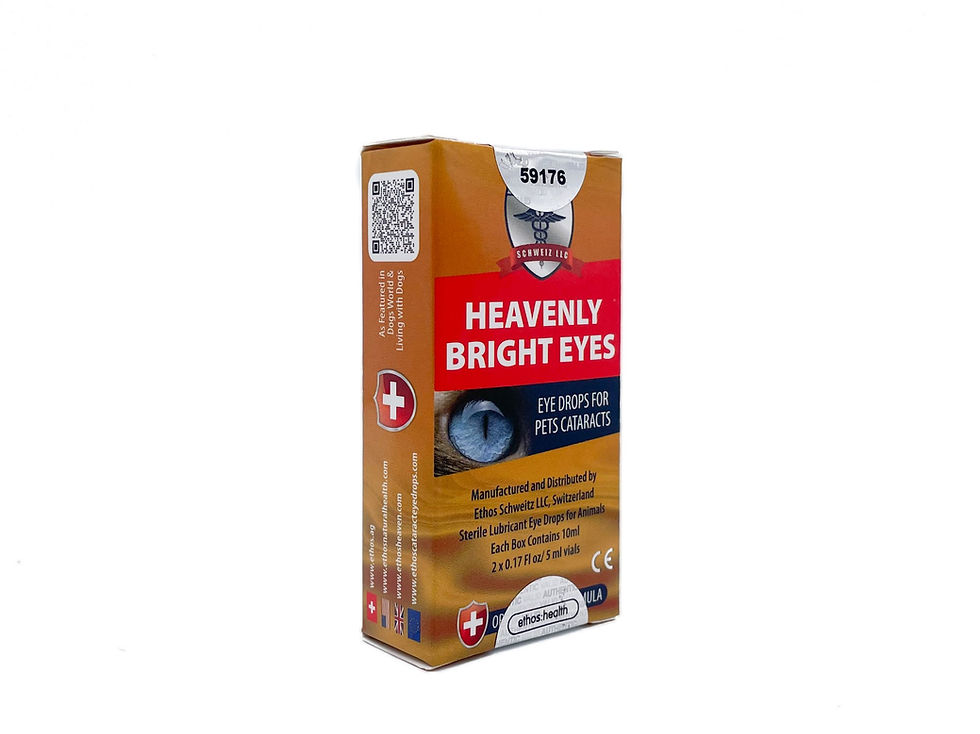
Our USP: Ethos Bright Eyes NAC Cataract Eye Drops
Ethos Bright Eyes NAC Cataract Eye Drops are formulated with N-acetylcarnosine to support the natural clarity of the lens, offered as a gentle, pain-free, non-surgical option that pet owners can administer at home.
How they're used:
Apply 6–8 drops per day to the affected eye (or both eyes, if needed).
Each box contains 2 x 5ml bottles, lasting approximately one week when treating both eyes at the recommended dosage.
A full course is 6 boxes, covering roughly 6–8 weeks — the timeframe generally associated with visible changes in lens appearance.
More mature or advanced cataracts may require a longer course; milder cases may need less.
As with any eye product, results vary from animal to animal. A pet's age, breed, general health, and the severity and type of cataract will all influence the outcome, so we always recommend discussing eye drop use with your vet, especially if your pet has diabetes or another underlying condition affecting the eyes.
Supporting Eye Health Alongside Eye Drops
Whether or not you use eye drops, there's a lot you can do day-to-day to support your pet's eye health and overall wellbeing:
Protect the eyes from UV light, dust, and household chemicals — direct sun exposure and airborne irritants can aggravate existing eye conditions.
Keep your pet at a healthy weight and active — regular, appropriate exercise supports circulation and overall health.
Feed a nutrient-rich diet — lean animal proteins (chicken, turkey, duck, lamb, goat, rabbit, pork, beef, fish, venison) combined with antioxidant-rich vegetables and fruits such as kale, carrots, sweet potato, and blueberries can be a valuable part of a balanced diet. A spoonful of plain yoghurt mixed into wet food is a popular addition too. As always, check with your vet before making significant changes to your pet's diet, particularly if they have diabetes or food sensitivities.
Track Progress with a Simple Diary
Because vision changes in pets can be gradual, keeping a daily diary is one of the most useful things an owner can do. Try simple, consistent tests:
Throw a ball a short distance, and gradually increase the distance over several days or weeks.
Watch how your pet navigates around furniture.
Note how confidently they go up and down stairs.
Recording these observations over time makes it much easier to spot genuine improvement or decline, and gives you (and your vet) a clearer picture of how your pet is responding to any treatment.
The Bottom Line
Cataracts are common, they affect a huge range of species, and while surgery remains the gold-standard treatment for restoring vision, many pet owners are looking for gentler, non-surgical options to support their pet's eye health — especially in the early stages or when surgery isn't an option. Ethos Bright Eyes NAC Cataract Eye Drops offer exactly that: a natural, pain-free addition to your pet's routine, best used alongside a healthy diet, regular exercise, and protection from environmental irritants.


